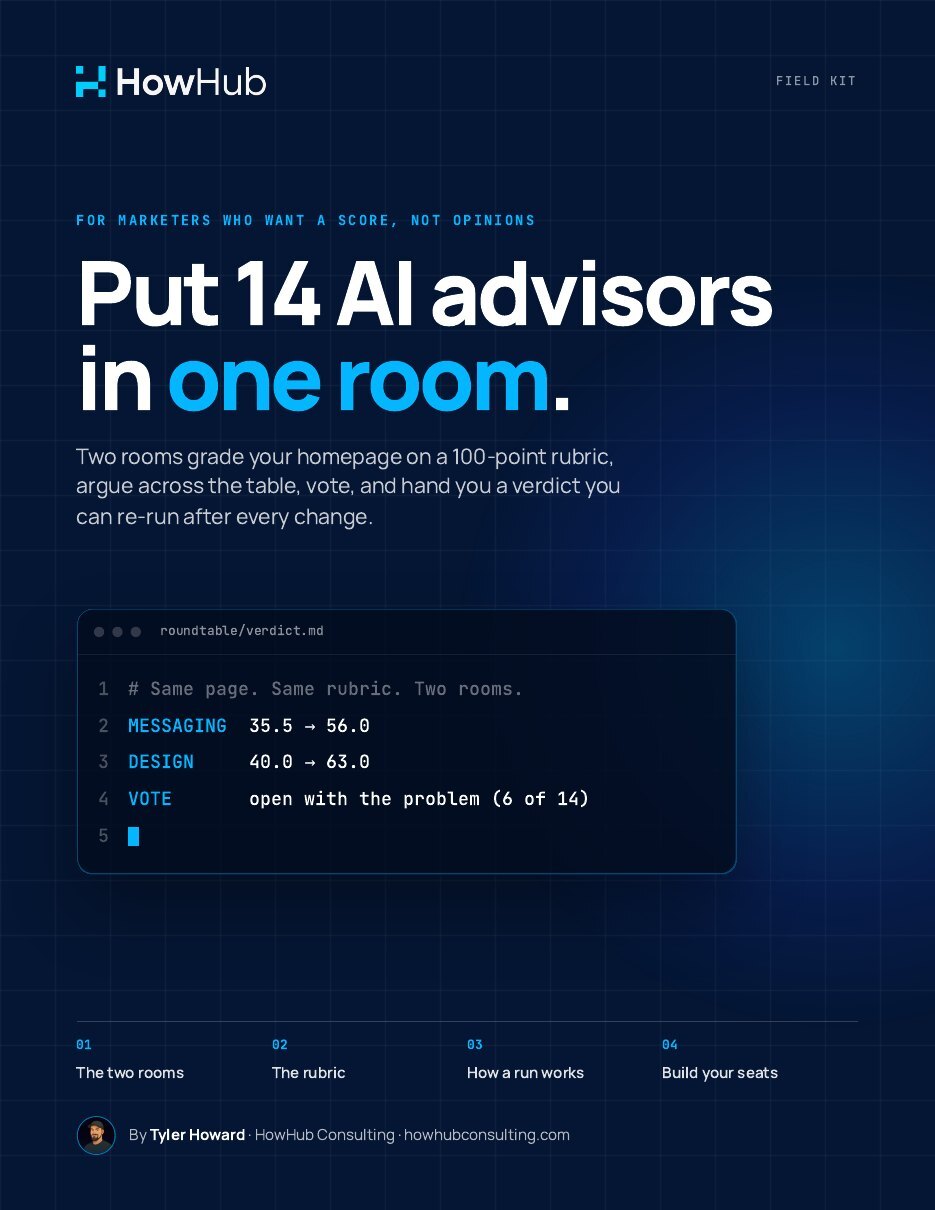
Seven grade what your page says. Seven grade how it looks. They argue across the table, vote, and hand you a score you can re-run after every change.
Six-page guide plus the Claude skill. The download opens right here.
Open START-HERE.md first, then build three seats per room. That's enough for a real fight.
Every seat is simulated and labeled that way. You build each one from public work you've read.
Messaging wants the page to say more. Design answers with what the layout can carry. Usually nobody scores it. Here both sides argue at one table, against one rubric, and the argument ends in a number.
Real lines from a run on a B2B homepage.
Buyers still choose between a book, a consultant, a survey, or nothing. It doesn’t say why you beat those.
Three contrast rows reuse a card we already have. Small build. Keep it below the hero.
Name the category in one phrase. A mind needs something to reject.
Category plus enemy plus offer in one line is three focal points. Pick one.
The page as text, screenshots, and two or three options to vote on.
One agent per seat, in parallel. No quote from the page, no score.
Each seat argues with the other room and changes its mind only on evidence.
Both scores, the vote, what to fix now, and what needs a real buyer test.

AI-Roundtable-Kit-Guide.pdfSix pages: the two rooms, the rubric, how a run works, how to build a seat.roundtable/SKILL.mdThe run, step by step. Drop the folder into Claude Code.roundtable/rubric-messaging.md100-point scorecard for what the page says, with scoring anchors.roundtable/rubric-design.md100-point scorecard for how it looks and works.roundtable/chair.mdThe rules that stop the room agreeing with you.roundtable/seats/A seat template plus all 14 roles, each with a reading list.roundtable/templates/The shape of round 1, round 2 and the verdict.START-HERE.mdSetup in Claude Code, or in a Claude.ai Project with no code.The number is each seat's share of its room's score. Start with three seats per room (clarity, positioning, counterweight; hierarchy, conversion, usability) and add the rest when you want a louder room.
Grab the kit and build your first six seats tonight. Or have me set up the room on your site and walk you through the verdict.
The seat-per-expert idea comes from Nate Herk's roast room. This version adds the rubric so the score can be re-run.